
AI
- Home
- Facade & exterior
- Terrace & stone cleaning
Terrace and stone cleaning in Vienna
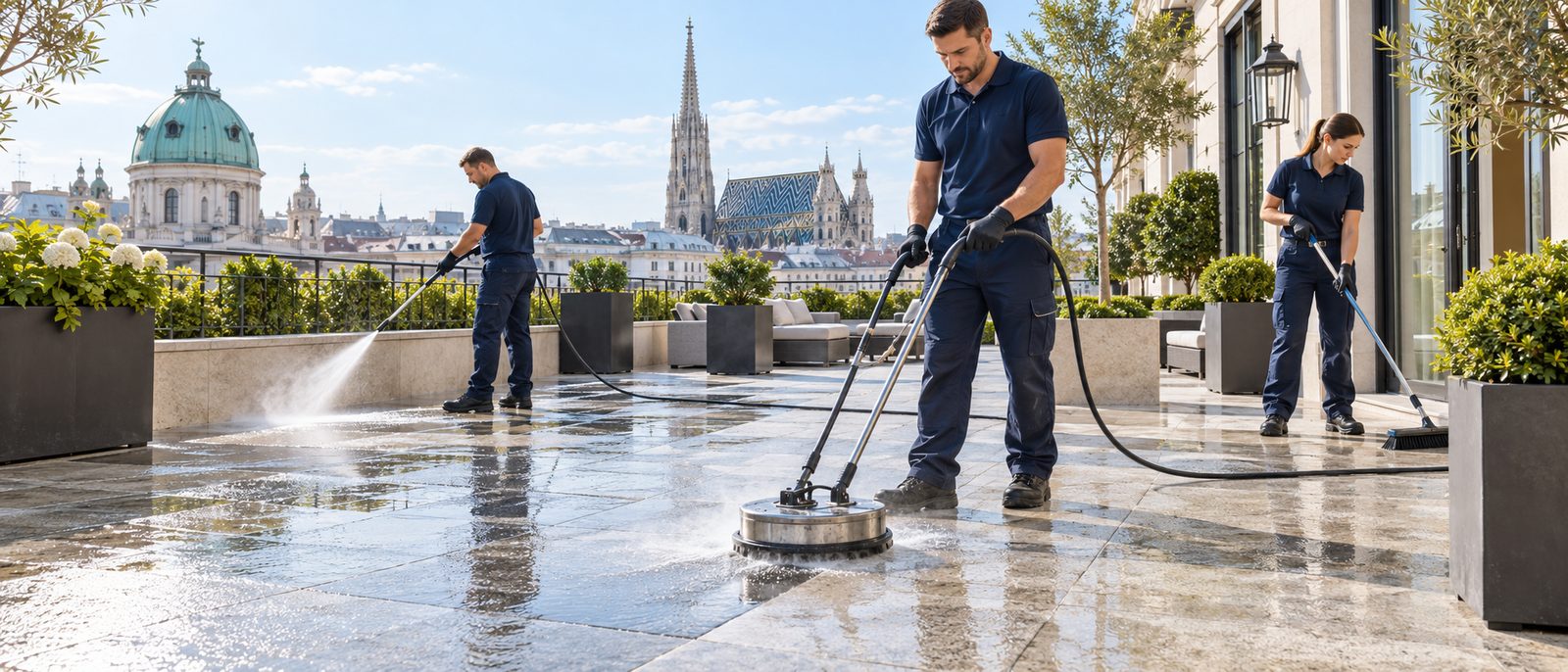
Paving, exposed aggregate concrete, natural stone, tiles, WPC and timber decking: green growth, algae and winter grime cleaned off before the season starts. Price based on area and surface type, binding after an on-site visit.
A surface cannot take just any pressure
On concrete paving you can work with pressure, but not on timber and WPC — too much pressure tears up the fibres and leaves the surface rough and grey. Natural stone and joints, for their part, suffer when the jointing material is washed out in the process.
That is why the surface type determines the method: a surface cleaner, a brush, warm water or a green growth remover that is given time to work instead of a pressure jet.
From our work: a test patch on stone
With stone, you never know in advance exactly how much will come out. That is why every sizeable area starts with a test spot: a pad, a product, a small section — and only then do we decide how to clean the rest.
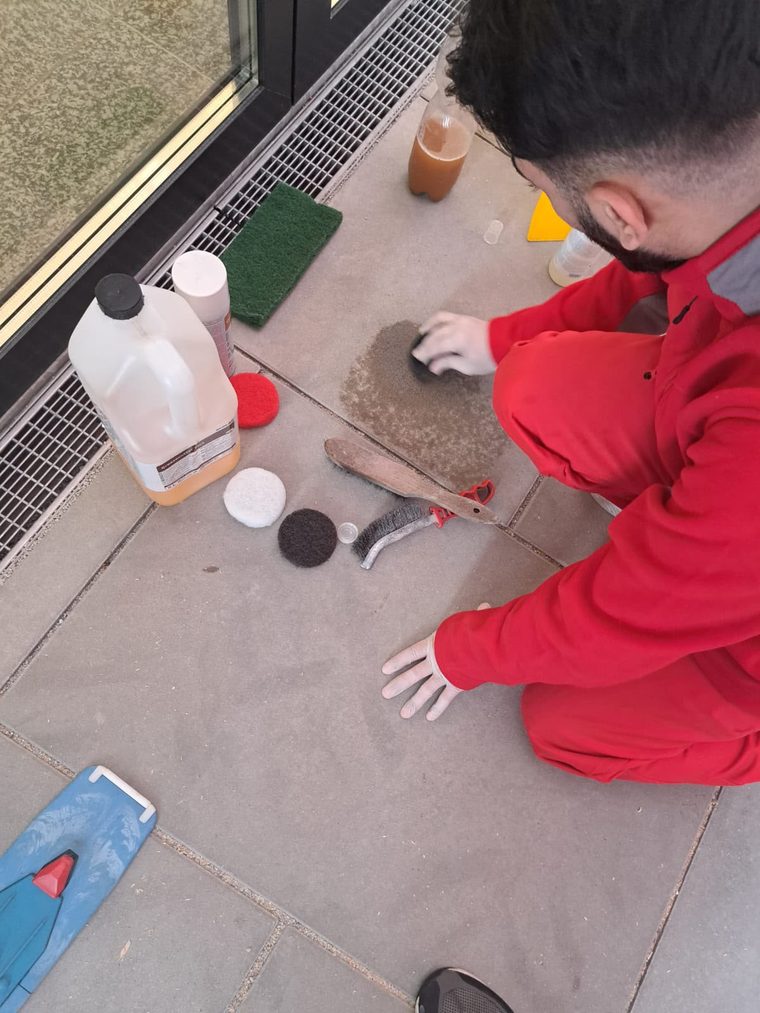
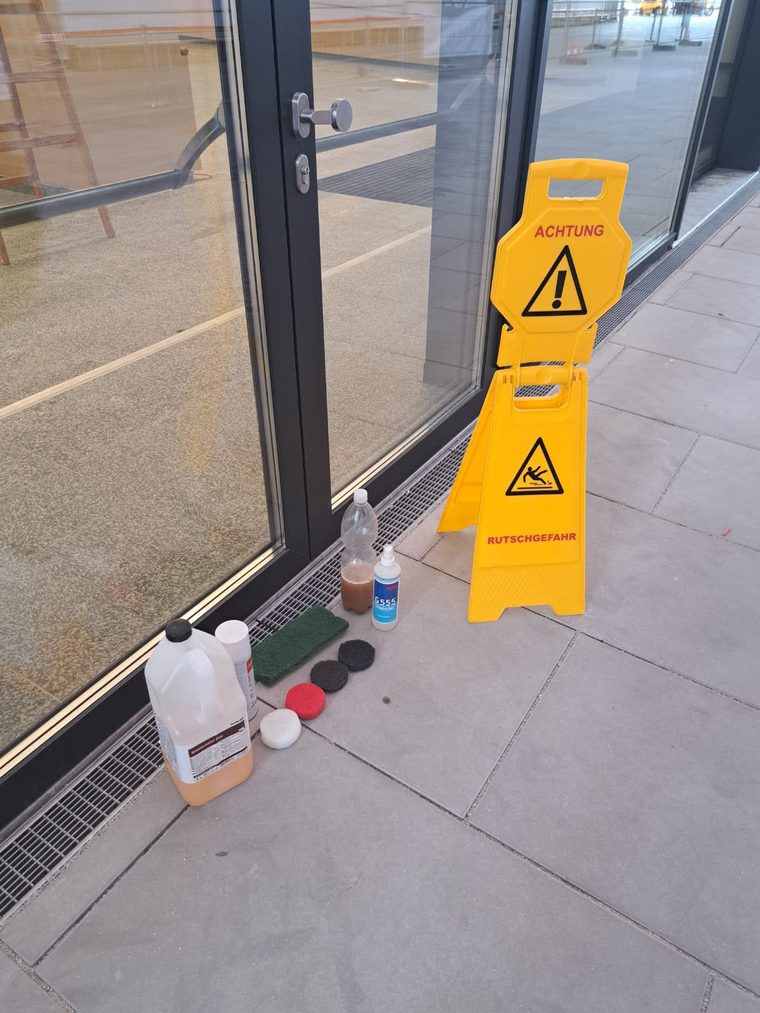
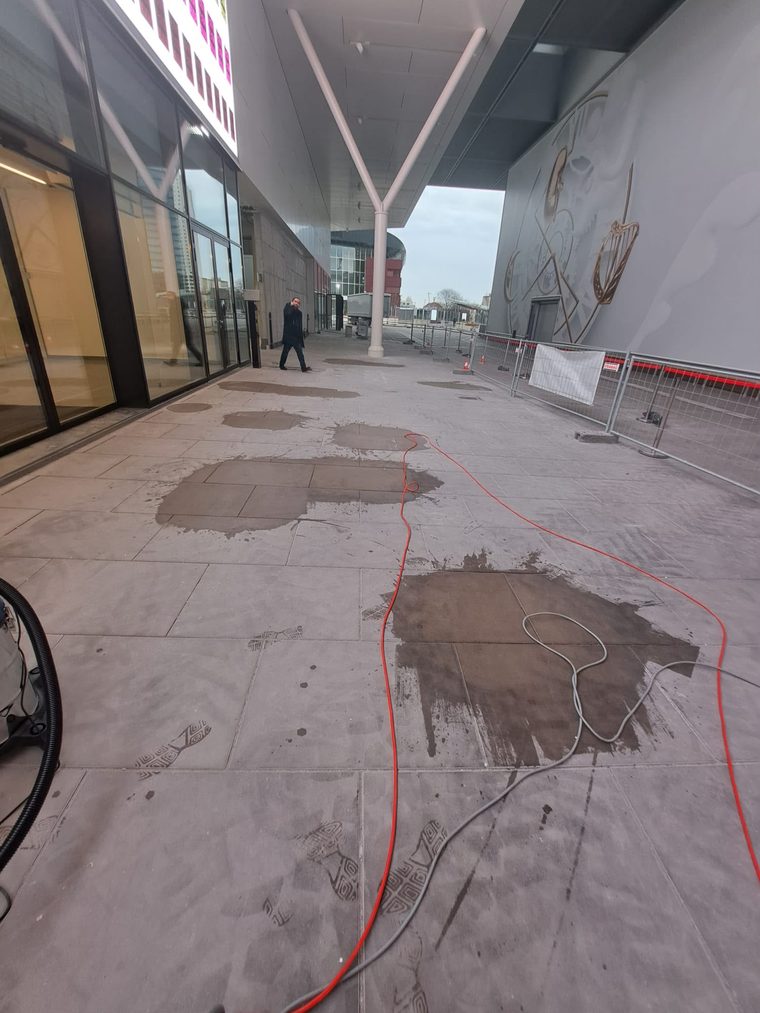
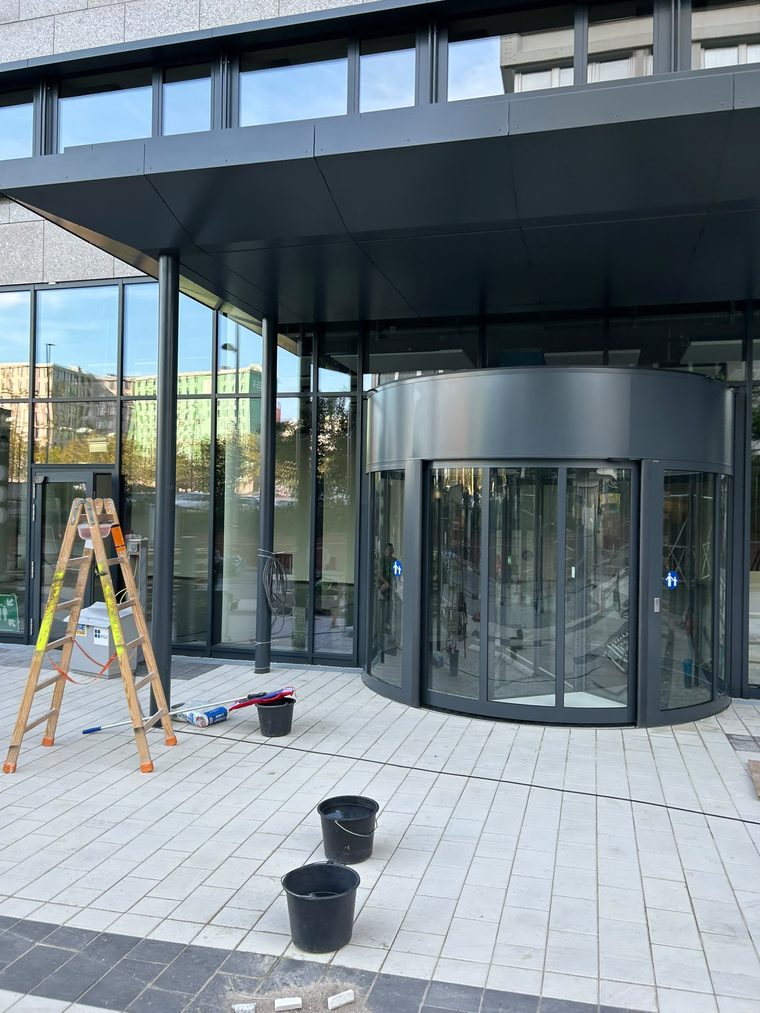
What the test patch shows is later set out in the quote: which method, how many passes and what will still be visible afterwards. The same applies to stone floors indoors — they are covered on our floor cleaning page.
Surface types and areas
Paving and exposed aggregate concrete
Driveway, path and courtyard — green growth and ingrained dirt; joints can be topped up as needed.
Natural stone and tiles
Cleaning terrace slabs gently, without washing out the joints or damaging the surface.
Timber and WPC
With adjusted pressure and a brush — wood that has turned grey comes up clean but still shows its age.
Balcony and loggia
Small areas with controlled water flow, so that nothing reaches the neighbours.
Stairs and plinths
Outdoor stairs, landings and splash zones at the plinth.
By arrangement
Impregnation and jointing sand are separate items — not part of the cleaning.
What affects the price
We quote for terraces after an on-site visit — these points determine how much work is involved.
| Factor | Why it matters |
|---|---|
| Surface type | Concrete, stone, timber and WPC call for different methods and speeds. |
| Area and layout | An open area is quick; lots of edges, steps and garden beds take time. |
| Degree of soiling | Slight green growth and moss that has been growing for years are two different jobs. |
| Water and drainage | Water connection on site, drainage of the dirty water, protection of plants and neighbouring areas. |
| Access | At ground level, or up the stairs and through the flat — often the biggest factor with balconies. |
To be honest: For terraces, we do not give a price per square metre online, because it means nothing without knowing the surface type and condition. After a quick look — photos are fine too — you get a fixed price that holds.
Included: travel within Vienna, equipment and cleaning products, covering plants and adjacent areas, and the test patch before the quote.
Not included, only as a separate item in the quote: impregnation and re-sanding the joints.
Not offered: sanding, oiling and staining timber decking, patching or re-laying slabs and paving, and repairs to stone and joints.
How it works
Enquiry
Surface type, approximate area, condition — a photo says more here than any description.
On-site visit
Checking a test patch, the water connection and drainage.
Quote
Method, fixed price, duration and what is not included.
The job
Covering plants and the facade, cleaning, and leaving the area and its surroundings clean.
Frequently asked questions
Terrace cleaning — quick answers
When is the best time?
In spring before the season, or in autumn after the leaves have fallen. Both work — in spring you see the result for longer.
Will the wood look like new again?
Clean, yes; new, no. Wood that has turned grey still shows its age. If you want the original colour back, you need oil or stain afterwards — joiners or painters do that, we do not.
Will the jointing sand be washed out?
On paved areas this can never be avoided completely. We are gentle on the joints and tell you beforehand whether they should be re-sanded.
Do you impregnate surfaces as well?
On request and as a separate item — it only makes sense once the surface has dried completely, which usually means a second appointment.
More in this area
A quote for your terrace
Surface type, approximate area and a photo are enough for the first step.